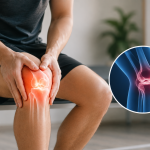
Rolled an ankle on a Saturday morning run. Felt a pop in your knee during a five-a-side match. Woke up with a shoulder that won’t lift past your ear after a weekend of badminton. If any of that sounds familiar, you’re not alone — sports and exercise-related injuries are one of the most common reasons people in Singapore end up searching for sports injury treatment, and the difference between a quick recovery and a nagging, months-long problem often comes down to how early you get the right diagnosis.
This guide walks through the injuries we see most often at Stellark Orthopaedics Centre, the signs that mean it’s time to stop self-treating and see a specialist, and what orthopaedic treatment actually involves — from the first consultation to getting back on the field.
This article is for general information only and isn’t a substitute for a proper medical assessment. If you’re dealing with pain right now, the safest step is to have it looked at.
Why This Matters More Than It Seems
Most sports injuries don’t look dramatic. A “slightly swollen” knee or a shoulder that’s “just a bit stiff” is easy to wave off, ice for a few days, and hope it settles. Sometimes it does. But soft-tissue injuries — ligament sprains, tendon tears, cartilage damage — don’t always hurt in proportion to how serious they are. It’s entirely possible to walk around on a torn ACL for weeks, because the knee can still bear weight even without a functioning ligament.
The risk of waiting isn’t just a slower recovery. Untreated joint injuries can lead to compensatory movement patterns (favouring one side, which then strains something else), chronic instability, and in some cases early-onset arthritis in the affected joint. Getting an accurate diagnosis early is what keeps a six-week recovery from turning into a six-month one.
The Injuries We See Most Often
– ACL and MCL Tears (Knee Ligament Injuries)
The anterior cruciate ligament (ACL) and medial collateral ligament (MCL) stabilise the knee during pivoting, cutting, and sudden direction changes — which is exactly why these injuries are so common in football, basketball, netball, and tennis. A classic ACL tear comes with a distinct “pop,” rapid swelling within a few hours, and a feeling that the knee is going to “give way” when you try to change direction or go down stairs.
MCL injuries tend to happen from a direct blow to the outside of the knee, and cause pain along the inner knee rather than the audible pop associated with ACL tears. Mild MCL sprains often heal with bracing and physiotherapy; a complete ACL tear more often needs surgical reconstruction, particularly for anyone planning to return to pivoting sports.
– Meniscus Tears
The meniscus is the cartilage cushion between your thighbone and shinbone, and it tears from twisting the knee while the foot is planted — a common mechanism in football and squash, but also from simply squatting awkwardly. Symptoms include a catching or locking sensation, swelling that builds up gradually rather than immediately, and pain along the joint line. Small tears can sometimes be managed with physiotherapy; larger or “locking” tears usually need arthroscopic (keyhole) surgery.
– Rotator Cuff Tears and Shoulder Injuries
The rotator cuff is a group of four tendons that keep the shoulder joint stable through overhead movement — think swimming, badminton, and throwing sports. A tear typically shows up as pain when lifting the arm overhead, weakness rotating the shoulder, and pain that disturbs sleep, especially when lying on the affected side. Shoulder dislocations are a separate but related injury, usually from a fall or direct impact, and need immediate assessment because a joint that dislocates once is significantly more likely to dislocate again without proper rehabilitation.
– Ankle Sprains
The most common sports injury of all, and the most commonly under-treated. A “simple” ankle sprain that isn’t properly rehabilitated is one of the biggest predictors of chronic ankle instability later on — that feeling of an ankle that keeps “rolling” on uneven ground. Grade 1 and 2 sprains (mild to moderate ligament stretching or partial tearing) usually respond well to bracing and a structured physiotherapy program; a Grade 3 sprain (complete ligament rupture) or any sprain where you genuinely cannot bear weight afterward warrants an X-ray to rule out a fracture.
– Stress Fractures
Less dramatic than a torn ligament, but easy to miss. Stress fractures develop gradually from repetitive impact — common in runners who’ve increased mileage too quickly, or anyone who’s recently jumped into a new high-impact training routine. The tell is pain that starts only during activity, then gradually starts showing up during everyday walking, and is localised to one specific point you can press on. Because stress fractures don’t show up clearly on a first X-ray, they’re sometimes missed until an MRI is done.
– Hamstring Strains
Sudden sprinting or kicking movements — common in football and track — can strain or partially tear the hamstring muscle at the back of the thigh. Mild strains cause tightness and soreness; more significant tears cause sudden, sharp pain, sometimes with bruising appearing a day or two later. Returning to sport too early after a hamstring strain is one of the most common causes of re-injury, which is why a structured, graded return-to-play plan matters more here than almost any other injury type.
When to See an Orthopaedic Specialist (Not Just Rest It Out)
Rest, ice, compression, and elevation (RICE) is reasonable first aid for a minor knock. But certain signs mean it’s time to book an assessment with an orthopaedic specialist rather than wait it out:
- You heard or felt a pop, snap, or tearing sensation at the time of injury
- The joint swells significantly within the first few hours
- You can’t put weight on the leg, or can’t use the arm/shoulder normally
- The joint feels unstable, or gives way when you try to use it
- There’s visible deformity, or the joint looks “out of place”
- Pain, numbness, or tingling spreads beyond the injury site
- Pain hasn’t meaningfully improved after 1–2 weeks of rest
- It’s a repeat injury to the same joint
None of these symptoms mean surgery is automatically the answer — plenty of these injuries are managed successfully with physiotherapy and bracing. But they do mean the injury needs an accurate diagnosis (usually a physical exam plus imaging) before you decide how to treat it, rather than guessing.
What Treatment Looks Like at Stellark Orthopedics Centre
At Stellark Orthopaedics Centre, based at Farrer Park Hospital, assessment typically starts with a physical examination and a review of how the injury happened, followed by imaging — X-ray, ultrasound, or MRI — where needed to confirm what’s actually torn, strained, or fractured. From there, our orthopaedic surgeons, sports medicine specialists, and physiotherapists work out a treatment plan together, which might mean:
- Non-surgical management — bracing, activity modification, and a structured physiotherapy program for sprains, mild strains, and partial tears
- Minimally invasive (arthroscopic) surgery — for ACL reconstructions, meniscus repairs, and rotator cuff repairs that need surgical correction
- A dedicated sports recovery program — structured rehabilitation designed to get you back to your sport safely, not just back to daily activity, with a graded return-to-play plan that reduces the risk of re-injury
Because Stellark also runs Medical Concierge and Corporate Medical services, patients coming through a corporate health screening or referred by a concierge case manager can move into orthopaedic care without having to re-explain their history or re-book through a separate system — the coordination happens on our end.
How Long Recovery Actually Takes
Recovery timelines vary a lot by injury and by person, but as a general guide: ankle sprains and mild strains often recover in 2–6 weeks with proper rehab; meniscus and rotator cuff repairs typically involve 3–6 months of structured recovery; ACL reconstruction is the longest of the common sports injuries, with most surgeons targeting 9–12 months before full return to pivoting sports. The single biggest factor in how well any of these timelines hold up isn’t the surgery itself — it’s whether the rehabilitation plan is followed properly afterward.
Frequently Asked Questions
Do I need a doctor’s referral to see an orthopaedic specialist in Singapore? No — in Singapore, patients can generally see a private orthopaedic specialist directly, without a GP referral. Seeing your GP first can still be useful if you want an initial assessment or aren’t sure whether the injury needs a specialist, but it isn’t a requirement.
Should I get an X-ray or an MRI for a sports injury? X-rays are typically the first step and are good at showing fractures and joint alignment, but they don’t show soft tissue like ligaments, tendons, or cartilage. If a ligament, meniscus, or tendon injury is suspected, an MRI usually follows to confirm the diagnosis.
Can a torn ACL heal without surgery? A fully torn ACL will not “heal back together” on its own, since the ligament tissue doesn’t reattach itself. Some people — particularly those who don’t play pivoting sports — manage well long-term with physiotherapy and bracing alone. Whether surgery is necessary depends on the severity of the tear, activity level, and the stability of the knee, which is why this is assessed case by case.
How soon after an injury should I see a specialist? As soon as possible if you have any of the red-flag symptoms above — inability to bear weight, visible deformity, a joint that gives way, or a pop felt at the time of injury. For less severe symptoms, a good rule of thumb is: if it hasn’t clearly improved within a week to two weeks of rest, get it assessed rather than waiting longer.
Is physiotherapy enough, or will I need surgery? Most sports injuries — including many ligament sprains and partial tears — are treated successfully without surgery. Surgery tends to be reserved for complete ligament ruptures (especially ACL tears in people returning to pivoting sports), large meniscus tears that lock the joint, and rotator cuff tears that don’t respond to conservative treatment. An accurate diagnosis is what determines which category an injury falls into.
Getting Back in the Game
Whether it’s a first-time ankle sprain or a suspected ACL tear, the fastest route back to full activity starts with an accurate diagnosis, not guesswork. If you’re dealing with a sports injury and aren’t sure whether it needs a specialist, chat with our team on WhatsApp or book a consultation with Stellark Orthopaedics Centre at Farrer Park Hospital.